User query
"Tickets in Arabic and Hindi keep climbing, and my two agents only speak English. Google Translate replies are earning us complaints. Hire locally, or outsource to one team that covers all three languages? And how do I keep quality from sliding?"
Anyone who has managed a help queue knows the slow-motion version of this problem. One Arabic email shows up on a Tuesday. A Hindi chat comes in on Thursday. Somebody pastes both into a translator and sends the result back, and everyone moves on. Fast-forward a quarter and those stray tickets have become a real chunk of your volume, with satisfaction scores to match.
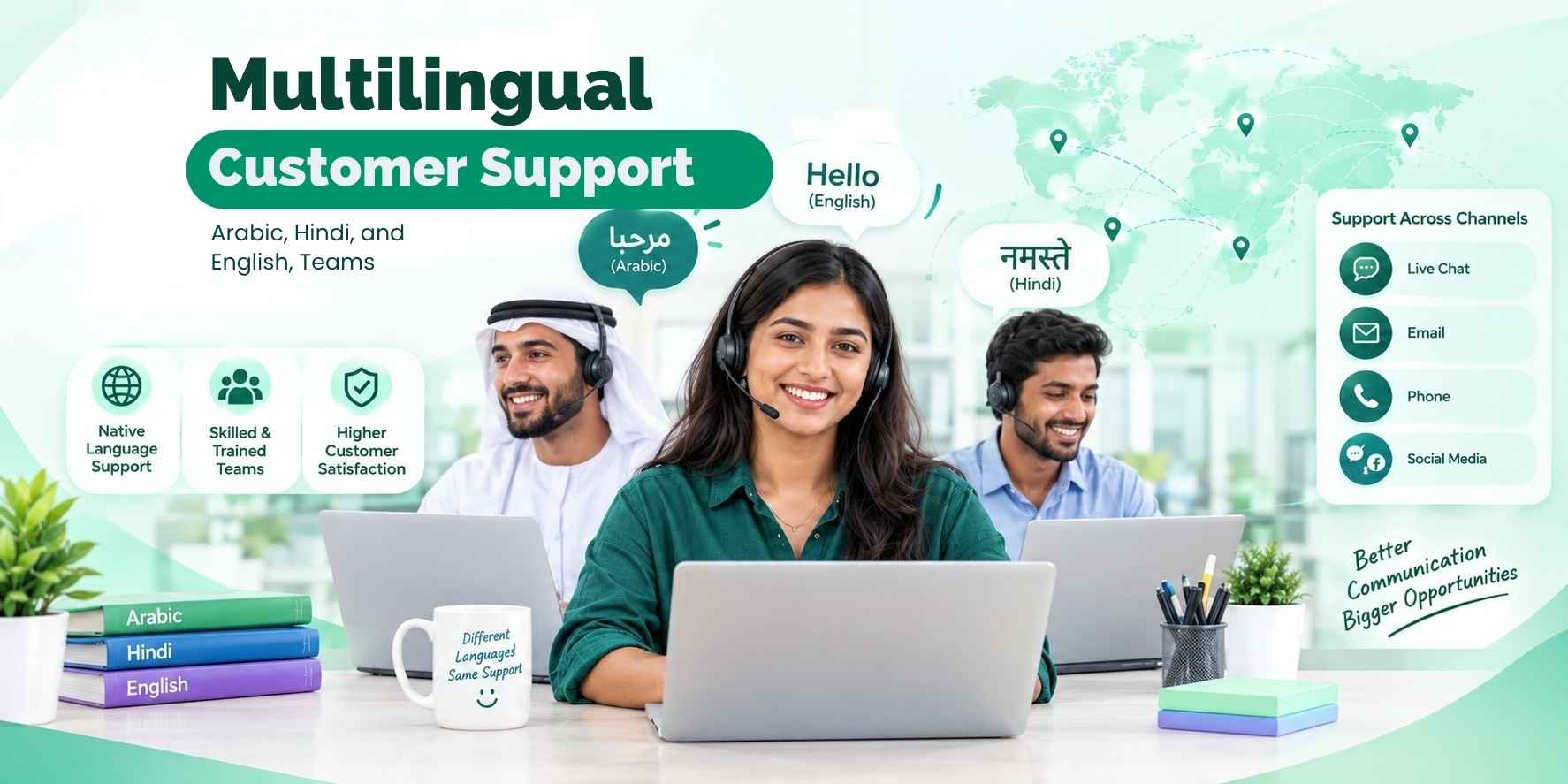
So what's the fix? In a nutshell, multilingual customer service is all about answering people in their own language and on their preferred channel — be it a phone call, live chat, email exchange, or social media. For most growing businesses, the simplest solution is a team of folks who speak Arabic, Hindi, and English that you can get from an outsourcing partner. This guide is going to explain the reasons behind it and what to keep an eye out for before you tie the knot.
Why multilingual customer support matters in your market
Nobody writes in to say, "your company doesn't speak my language." They quietly go elsewhere. Picture a customer who sees a double charge on their card. If they can't explain it in Hindi, they'll dispute it with the bank instead, and you'll pay the chargeback fee.
USA and Canada
Arabic and Hindi speakers are all over US banking, healthcare, and e-commerce. But in Canada, the picture gets a whole lot more complicated. In Quebec, French is a given, but places like Brampton, Surrey, and Toronto also have big enough Punjabi, Hindi, and Arabic-speaking communities to make you take notice. Before you start making a decision, take a look at your sign-up data by language.
UK and Australia
Think of cities like Birmingham and Leicester, or Sydney and Melbourne. They all have big South Asian and Arabic-speaking communities. A company that makes sure to answer the phone in Hindi is going to get a lot of attention, mainly because so few of its competitors are bothering.
UAE
This one is nearly obvious. Arabic is the official language, English runs most offices, and Indian residents are one of the largest groups in the country. Say you run an online pharmacy in Dubai and only support English. Round about half of your potential customers (it's probably more in some areas) would be doing business with you in a language that's not their first one, at a time when they really need to talk to you about their health.
Arabic, Hindi, and English: what each team handles
English agents tend to catch tickets first. They sort what comes in, answer the routine stuff, and keep your help articles current.
Arabic needs care. Modern Standard Arabic is all well and good for written stuff like guides, but nobody phones up a support line speaking it like that. Someone from Riyadh or Cairo uses their own local dialect when they call, and a stilted textbook reply can come across as pretty cold. Ask any provider you're looking at if they've got staff who speak those local dialects. And ask about greetings too — lots of Arabic-speaking customers expect a warm and proper introduction before you start getting into the nitty-gritty of the problem.
Hindi callers often blend in English words mid-sentence, and that's completely normal. Good agents follow along easily. They can also write proper Devanagari for email, which is trickier than it sounds.
Don't forget to calendar the holidays — Ramadan changes working hours across the Gulf, Eid puts all offices on holiday for a few days, and Diwali does the same for your Hindi-speaking staff and customers, catching you by surprise. So put these important dates in your rosters well in advance.
Customer support outsourcing vs. building in-house
Neither is wrong. Which one fits depends on your size.
Hiring in-house keeps everything under your control — your agents sit alongside the product team and pick up knowledge quickly as a result. But then there are all the other things you'll need to consider — recruiting across three different language groups, paying salaries in line with each local market, dealing with their holidays, and building shift patterns from scratch. Now, if you only need one extra language and your volumes are nice and low, then that's a pretty manageable addition.
Outsourcing customer support shifts the recruiting, training and scheduling responsibilities to someone else, which does mean that native speakers arrive on the job more quickly and you can always just add or shed agents as you need them. But there's a catch. You can't just hand over the whole thing and forget about it. You'll need to spend the first month reading tickets, giving feedback, and making sure your documentation is in order.
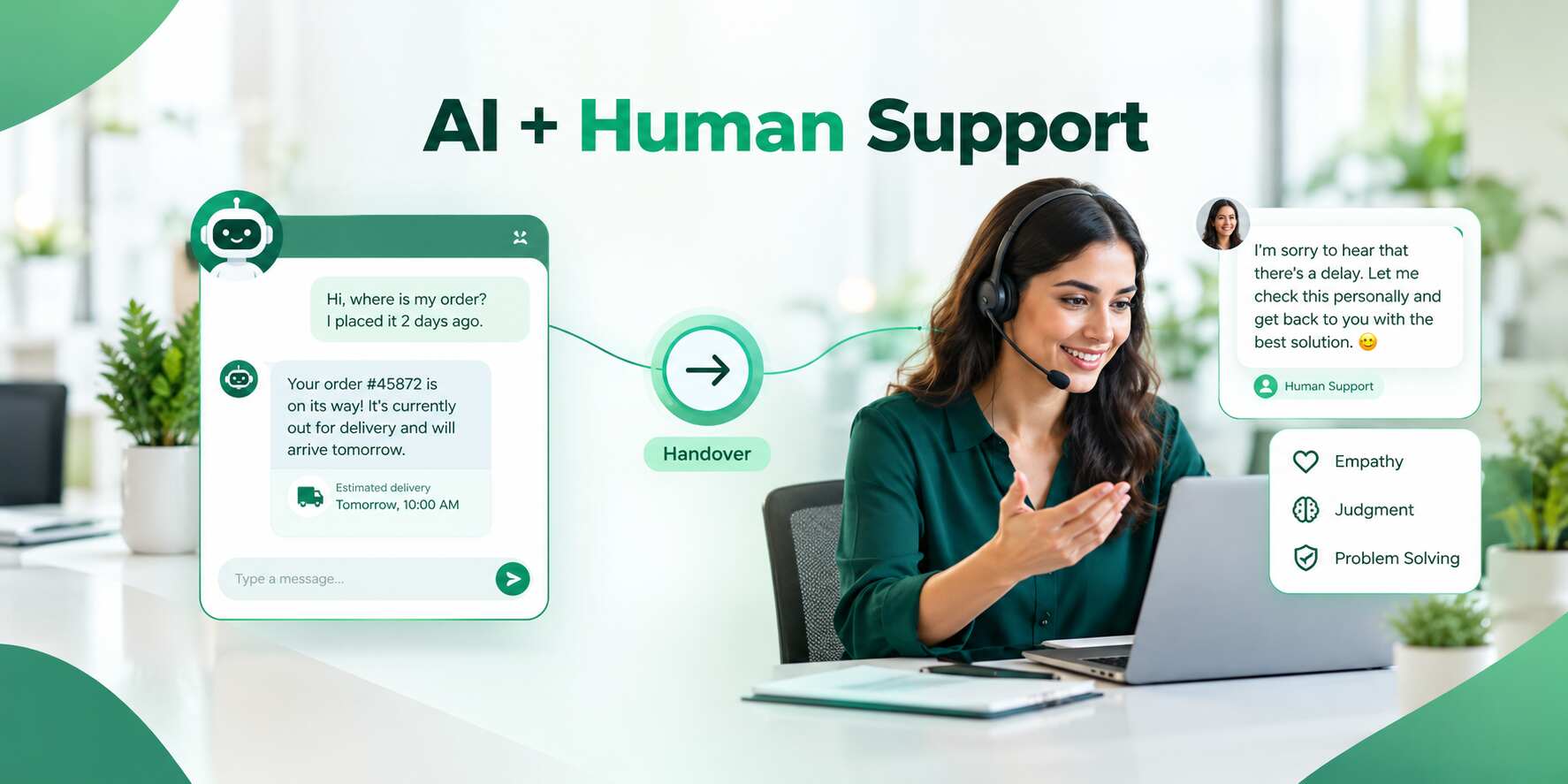
Lots of companies get a bit of a hybrid setup going — their own experts take on the tough cases while an outsourced team handles those repetitive first-line questions that are just looking up answers in a book anyway.
Tickets piling up in languages your team can't cover?
Tell us your volumes and the languages you need. We'll map out what an Arabic, Hindi and English team would look like for you.
How 24/7 customer support works across time zones
Around the clock service almost seems too good to be true, but when you look at it on a world map — Manila is a whole 12 hours ahead of New York after all — it puts things into perspective. While your US customers are drifting off to sleep, an agent in the Philippines is likely sitting down to lunch. Someone who emails you at 11 p.m. gets an answer before breakfast, with nobody working a graveyard shift.
A plan covering all five of your markets might look like this:
- US and Canadian overnight hours are the regular working day for an Asia-based team.
- UK and UAE hours overlap with the team's late afternoon and evening.
- Australia is the nearest time zone, so it's the easy one.
One warning. When you see that "24/7" touted on a sales page, it's probably nothing more than a marketing buzzword. Ask to see the actual schedule, broken down into specifics by language and channel. If the best they can give you is "Arabic chat from 2 a.m. to 10 a.m. Eastern", then at least you're getting some kind of concrete answer — if the response is vague, then it's probably a red flag.
Call center outsourcing and helpdesk outsourcing: what to ask before you sign
Voice and call center outsourcing, as well as help desk tickets and chat, share a lot of the same checklist, so get familiar with it.
- Language testing. You can't learn much about a potential provider by having them read a script out loud. Ask them to show you a recorded call — preferably where the customer is getting upset — in every single language you're buying. Do this for every language.
- Data access. Agents will be inside your CRM, looking at real customer records. How is access controlled? Is it logged? If you're handling patient data in the US or personal data from UK customers, then make sure you 100% know how HIPAA and GDPR are covered. Don't be vague on this, ask for specifics.
- Metrics. Agree on four before day one: first response time, resolution time, satisfaction score, and quality audit score. Review them every week for two months, then taper off.
- Knowledge base. Your agents are only as good as the material you give them. So start by translating your 20 most visited help articles into Arabic and Hindi first. Once you have those, then tickets and chat queries will start to drop and the team will have solid ground to build on.
- Pricing. Languages, hours, channels and headcount all contribute to the final number on your bill. Rarer dialects and overnight shifts can sometimes cost a pretty penny extra. Ask your provider to do you a line-item quote and ask what happens if volume falls.
A common mistake worth naming: they sign up, send a 40-page PDF to the new team, then just assume they're good to go. Newsflash — they're not. A quick three-day call where an agent takes your best person through a live ticket is actually way more instructive than that PDF, for sure.
Where The Remote Staff fits
The Remote Staff specialise in putting together remote teams for companies that'd rather not have to build their own big operation from scratch. If you're in the US, UK, UAE, Canada or Australia, we can give you a team assigned to your account that's trained on your product, and work with you in the way you already work.
But let's be honest — this matters a lot more for multilingual work than it does for just about anything else. When the same agents — whether that's Arabic, Hindi, or English — are handling your queue week in, week out, they get to know your product inside out, your tone, and the usual problems your regulars keep running into. Customers feel the difference. They're talking to someone who knows the answer, not whoever happened to be free.
Comparison: in-house vs. typical call center vs. The Remote Staff
| Factor | Local in-house team | Typical large call center | The Remote Staff |
|---|---|---|---|
| Team model | Employees you hire and manage | Shared agents across many clients | Dedicated team for your account |
| Language coverage | Limited by local hiring | Broad, but often a shared pool | Arabic, Hindi, and English (confirm dialects at quote stage) |
| Product knowledge | Strong | Often thin | Grows over time with dedicated staff |
| 24/7 coverage | Costly shift premiums | Available | Planned through a shift schedule |
| Scaling up or down | Slow | Depends on contract | Flexible team sizing |
| Cost | Highest | Moderate to high | Typically lower than local hiring |
| Control and reporting | Full | Varies | Direct contact with your team |
Confirm exact language pairs, shift hours, and pricing with the provider before committing.
Why choose The Remote Staff
The Remote Staff gives you a customer support team that's steady, adaptable, and really easy to manage. You get to work with familiar agents, stick with whatever software and workflow you've already got going, and dodge a lot of the headache — and expense — of hiring locally. As your business starts to grow, you can either expand your team or add support for other languages without having to tear the whole thing down from scratch.
- Consistent support: Work with the same crew of dedicated agents so your customers get to know them and start to trust them.
- One support partner: Handle multilingual support through one dedicated team, rather than chasing down multiple different suppliers.
- Lower hiring costs: Cut back on the costs of recruitment, office space, equipment, and all the rest of the expenses that come with hiring people in-house.
- Works with your tools: No need to fiddle around with new software or change workflows — just keep on doing what you're already doing.
- Easy to scale: Start small, then add more agents or language support as and when it makes sense to do so.
- Direct communication: Stay in touch with your support team, and get regular updates on how they're doing.
Frequently asked questions
Multilingual customer support means helping customers in their preferred language across channels such as phone, email, live chat, and WhatsApp. Businesses can use multilingual agents, translation tools, or a combination of both to communicate clearly with customers.
The price depends on what kind of support you need. For example, the cost can change based on the languages you want, the number of customers you handle, your working hours, and whether you need support by phone, WhatsApp, email, or chat. If you need someone available around the clock, that will also affect the price. It's best to discuss your requirements with a provider and get a quote based on your actual workload.
Yes. Some customer support providers can handle Arabic, Hindi, and English through one outsourced team. Before choosing a provider, confirm the languages and channels they support, the availability of native or fluent agents, and how they handle peak hours, weekends, and holidays.
Yes. Outsourced support teams can provide coverage through rotating shifts, including evenings, weekends, and holidays. The required staffing depends on your expected contact volume and service-level requirements, so it is useful to review your support data before setting up a 24/7 schedule.
Multilingual support can be useful for businesses that serve customers from different language backgrounds, including e-commerce, hospitality, travel, real estate, healthcare, financial services, and telecommunications. It can be particularly useful when customers contact the business outside standard working hours or prefer to communicate in their first language.
Yes. Most support teams can use the CRM or helpdesk system you already have. They can reply to customers, update tickets, look at previous conversations, and follow the same process as your in-house team. Before you hand over the work, ask the provider to test the setup, so you know everything works properly.
Build your customer support team with us
Imagine a customer reaching out in Arabic at 12 a.m. in their Dubai home, or in Hindi on a quiet Sunday afternoon in Brisbane — do they get the same level of service as someone in New York speaking English? If the answer is no, there's a hidden cost to consider. For a lot of businesses that are growing rapidly, the easiest way to bridge this gap is often by outsourcing, but only if you partner with someone that's going to put the time into testing their agents properly, share their schedule openly with you and make your customers a priority — as if they were their own.
If you're getting slammed with tickets in languages your team just can't handle, then get in touch with The Remote Staff and we can help you put together a team of dedicated Arabic, Hindi, and English support pros that will be an asset to your business.
Serve every customer in their own language
We build you a dedicated Arabic, Hindi and English support team — trained on your product, working in your tools, on a schedule you can see.