
What business owners are asking online
A small business owner on Reddit's r/Entrepreneur (January 2026) said growth had been steady and a $7-an-hour virtual assistant was working so well that they wanted to outsource the rest: social media, bookkeeping, IT, and email support. The replies were split. One person said to keep IT with someone who understands local compliance. Another said hiring in India hadn't worked for them. A third gave the advice most people agreed with: start with one role and document everything first.
That thread brings home an obvious point about outsourcing: success comes down to one thing — how well you do it. Not where it's done, but how you go about it. Done right, outsourcing helps businesses work more efficiently, save money, and build a team that genuinely helps them grow.
As a company grows, juggling extra tasks like customer support, marketing, IT, and admin strains your internal teams and your budget. Hiring locally adds up fast — not just salaries, but benefits, recruitment costs, and workspace. Which is why so many businesses in the US, UK, UAE, Canada, and Australia are turning to outsourcing to India to tap into skilled people, cut overheads, and scale their operations.
Why do companies choose to outsource to India? For three good reasons: lower operating costs (50 to 70% less than doing it locally is typical), access to an enormous pool of trained, English-first professionals, and the ability to add people in a couple of weeks rather than a couple of months. Many also like that work keeps getting done even when the local office is closed for the night.
Below, we'll dig into what outsourcing to India involves, the benefits, and the problems it solves for growing businesses — then how it plays out in the real world, the risks everyone warns about online, and how to find a partner that won't leave you high and dry.
What outsourcing to India really means
Outsourcing to India means handing a specific chunk of work to people in India, or setting up a team of dedicated people to work alongside yours, instead of hiring locally. And it looks different from one business to the next.
Business process outsourcing in India
Business process outsourcing is the tried-and-true model. A provider takes the reins on something routine — customer support, data entry, bookkeeping, or order processing — and runs it with its own staff. India has done this for decades, so the training, tools, and talent are strong.
Dedicated remote teams
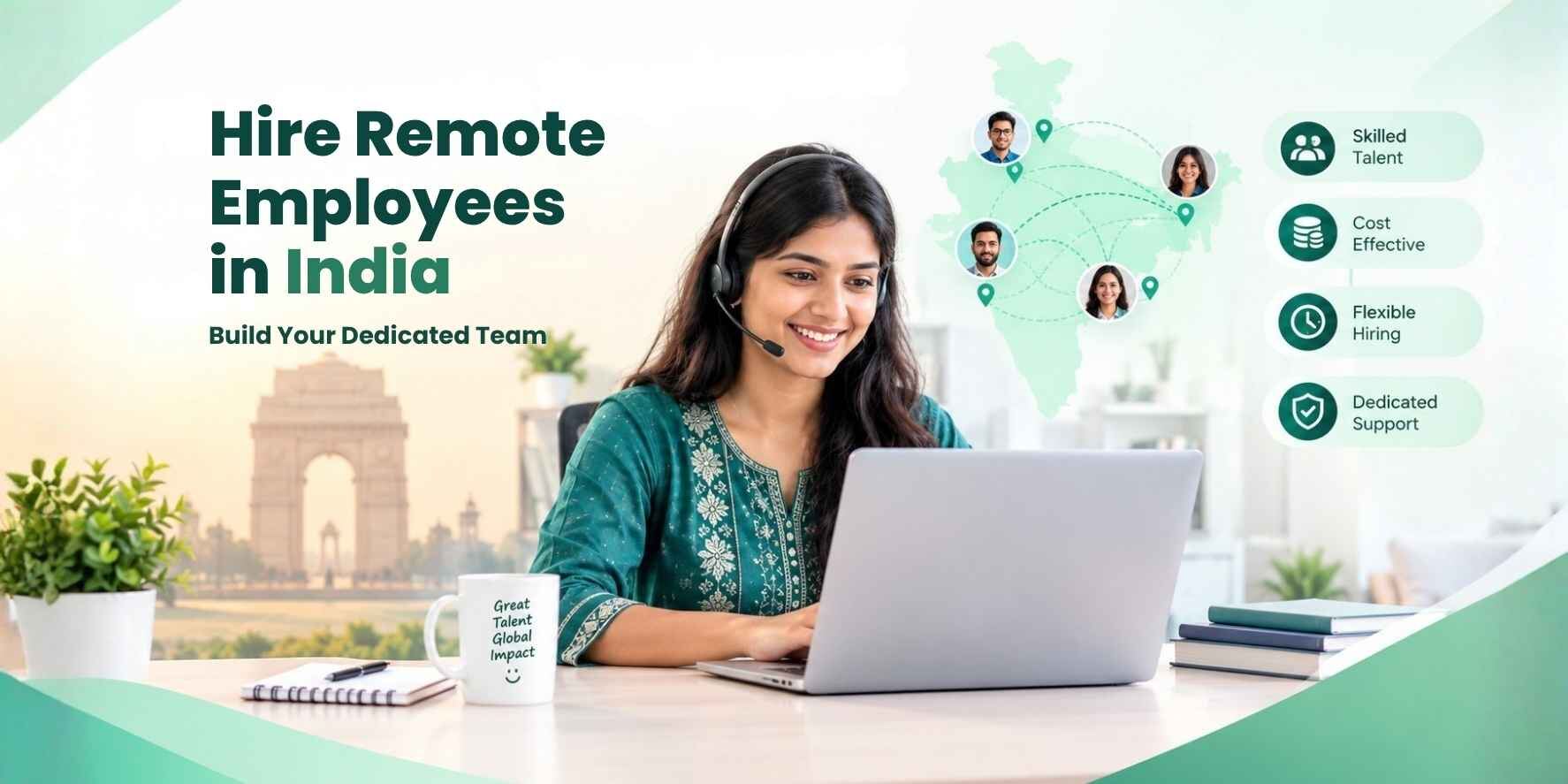
Then there's the newer model: hiring a dedicated team in India to work exclusively for you. These people report straight to you and work to the priorities you set, while a partner handles the background stuff — recruiting, payroll, and equipment. Outsourcing services in India cover both models now; the right choice depends on how much control you need over the day-to-day work.
The main benefits of outsourcing to India
Cost-effective outsourcing without sacrificing quality
Here's what gets left out of the salary bill: benefits, office space, equipment, recruitment costs, and the time spent managing staff. Offshore teams in India come with a fraction of those costs, which is why so many owners cite savings as their main reason. Your actual savings depend on the job and city, but 50 to 70% is a fair expectation.
A word of warning: people who end up posting frustrated rants online often got burned chasing the lowest price. Affordable and high-quality talent both exist in India — it's just not always the same person or company.
A skilled and rapidly growing workforce
India produces around 2.5 million STEM graduates every year, and plenty of multinationals run their own technology and operations centres there. When big companies set up shop in a country, it's usually about more than savings. For you, it means access to strong developers, digital marketers, designers, accountants, IT pros, and support staff — without competing for a shrinking local talent pool.
Time zones give you a longer working day
India is 4.5 to 5.5 hours ahead of the UK and 1.5 hours ahead of the UAE, and roughly half a day ahead of North America. That can be awkward for live meetings, but for almost everything else it's a bonus: hand off tasks in the evening and they're finished when you log in the next morning.
Scaling up and finding global talent is now easy
Hiring the best global talent used to mean relocation packages and stacks of paperwork. With a team offshore in India, you can add a role in a matter of weeks and scale up or down as needed — a godsend for businesses with fluctuating revenue.
The growing-business problems it solves
- You're already maxed out: the founder ends up doing every job — support, admin, marketing — because nobody else has the bandwidth.
- Finding the right person is a nightmare: hiring locally can take weeks or months, and a bad hire costs you big.
- Overheads keep growing: every new hire brings salaries, software seats, a desk, and benefits, all before you've seen a return.
- Night and weekend support isn't an option: customers expect 24/7 contact, and servers go down at 2 a.m.
- Some skills are a luxury you can't keep full-time: SEO or DevOps, say — you need them ten hours a week, not forty.
A remote team in India is often your best bet for filling those gaps. But if your workflow is a jumble in your head, a new hire won't tidy it for you. Get it down on paper first, so your new team member has something to follow.
Start with one role, done right
Tell us the first role you want to outsource. We'll send dedicated, pre-vetted professionals in India who work your hours — profiles in 48 hours.
Outsourcing to India from the USA, UK, UAE, Canada, and Australia
Each market has its own quirks — worth thinking about upfront.
United States
When the Indian evening slides into the American morning, US companies work out a smooth handoff with their Indian teams. If you're in healthcare, fintech, or law, think about HIPAA and data handling from the start, and get it in writing.
United Kingdom
London and India hours overlap nicely — start your team at 10 a.m. London time, which is mid-afternoon in India. Before anyone touches customer records, check your provider's track record on UK GDPR.
UAE
For Dubai and Abu Dhabi businesses, being just 90 minutes ahead of India makes scheduling easy. It's a natural base for customer support, accounting, and development work.
Canada
Toronto and Vancouver owners often use Indian teams for support, bookkeeping, and IT. Don't ignore PIPEDA compliance, and iron out your core overlap hours early — the gap runs about 9.5 to 13.5 hours depending on the province.
Australia
Sydney and Melbourne are 4.5 to 5.5 hours ahead of India, so the Indian morning crew meets the Australian afternoon. Bookkeeping and digital marketing are the roles Australian businesses outsource to India most.
The risks — and how to avoid them
Spend time on Reddit or Spiceworks and you'll find grim stories: missed deadlines, staff who can't work independently, and support tickets old enough to vote. Many are real — and most trace back to the same rookie errors:
- Briefs as clear as mud: ask for a "website" and you get a generic website. Nail down specs, SOPs, and examples so there's no room for interpretation.
- No one on your team owns the project: you need someone on your side watching the work and running a weekly review.
- Mixing up outsourcing decisions with the tasks: keep strategy and approvals in-house; don't hand those to an outsourced team.
- Looking only at the price tag: compare experience, staff retention, and references, not just rates.
- Cutting corners on data security: use NDAs from the start, and set access controls and role-based permissions right away.
Starting small is the best way in. Pick one role and outsource it for 60 days — enough to see how it works before you expand.
How to choose an outsourcing company in India
There are loads of outsourcing companies in India, from tiny outfits to firms with tens of thousands of staff. Size isn't everything; fit is. Ask these before you sign:
- Who will actually do your work, and can you talk to them?
- Is the team dedicated to you, or spread thin across many clients?
- What happens if someone key leaves or isn't up to the job?
- Can you get references from businesses in your own country?
- How do they handle security, confidentiality, and compliance?
- Is the pricing clear, and can you scale up or down without a penalty?
If you can, get them to run a short paid trial. Ten days of actual work tells you far more than a slick sales pitch.
A recommendation for businesses ready to start
If you want your own team rather than an agency that treats you like a queue number, look for a remote staffing provider that recruits, onboards, and supports people who work only for you. You direct the work; the provider handles recruiting, payroll, equipment, and day-to-day HR in India. This model suits growing businesses that already have a process and need more hands, not a black box. Here's how it compares with the other common options.
Four ways to add capacity
| Factor | Local Hiring | Freelance Marketplaces | Traditional BPO Vendor | The Remote Staff |
|---|---|---|---|---|
| Cost | Highest (salary, benefits, office) | Low hourly rate, unpredictable | Moderate, per seat or per ticket | Lower than local, predictable monthly cost |
| Control over the work | Full | Full, but self-managed | Limited, vendor manages | Full, you direct the team |
| Dedication | Full-time | Often shared across clients | Shared pool of agents | Dedicated to your business |
| Time to hire | One to three months | Days, quality varies | Weeks | Weeks |
| HR, payroll, equipment | Yours | None, and no support | Vendor | Handled by the provider |
| Scaling | Slow | Ad hoc | Fast, but rigid contracts | Add or remove roles as needed |
Why choose The Remote Staff
- Dedicated team members: they work only for your business, not a shared pool.
- Roles growing companies hire most: developers, digital marketers, customer support agents, and IT support.
- Direct management: you set priorities and daily tasks, so nothing gets lost with a middle manager.
- Less overhead: we handle recruiting, screening, payroll, and workspace.
- Built for your markets: the service focuses on the US, UK, UAE, Canada, and Australia, so time zones, terminology, and expectations aren't new.
Frequently asked questions
Mostly to cut costs, reach skilled people faster, and keep work moving across time zones. Local hiring can take months and costs far more once benefits and office space are counted. India's large talent pool lets businesses fill roles quickly without lowering standards.
Often 50 to 70% cheaper for comparable roles once you include benefits, equipment, and overhead. The exact gap depends on the role, seniority, and model. A senior engineer saves less than a support agent, so ask for quotes by role.
Customer support, software development, IT support, digital marketing, bookkeeping, data entry, design, and virtual assistance are the most common. As a rule, if the work follows a repeatable process and can be done online, it can usually be outsourced.
Choose a dedicated team model, write clear SOPs, and hold weekly check-ins with a shared task board. Use Slack, Zoom, and a project tracker, and agree on two to three overlap hours a day. The first month needs the most attention; after that, it settles into a routine.
Yes, if you start small. Many startups begin with one role, such as support or a developer, and expand after 60 to 90 days. Small engagements keep risk and cost low, and flexible contracts mean you aren't locked in if it doesn't fit.
Dedicated staff, transparent pricing, references from your country, clear security practices, and a replacement policy. Interview the people who will actually work for you, not just the sales team, and run a short trial before committing.
Make outsourcing to India work for you
Outsourcing to India is close to a no-brainer on the numbers: lower costs, access to world-class talent, and more hours in the day for what matters. But don't expect it to work if you hand over a clunky process, chase the cheapest option, or vanish once the project starts. Steer clear of those three pitfalls and most of the horror stories pass you by.
Start with one person. Get the work down in a document. Stick to what your contract says, and check in every week. If that first hire works out, bring on the next — one at a time.
Ready to build a remote team in India that actually knows what you want? Get in touch with The Remote Staff, tell them the skills you need, and they'll set you up with a team that's yours and yours alone.
Build a team in India that's yours alone
We recruit, employ, and manage dedicated professionals in India who work your hours and report to you. Interviews are free, and you pay only when you hire.